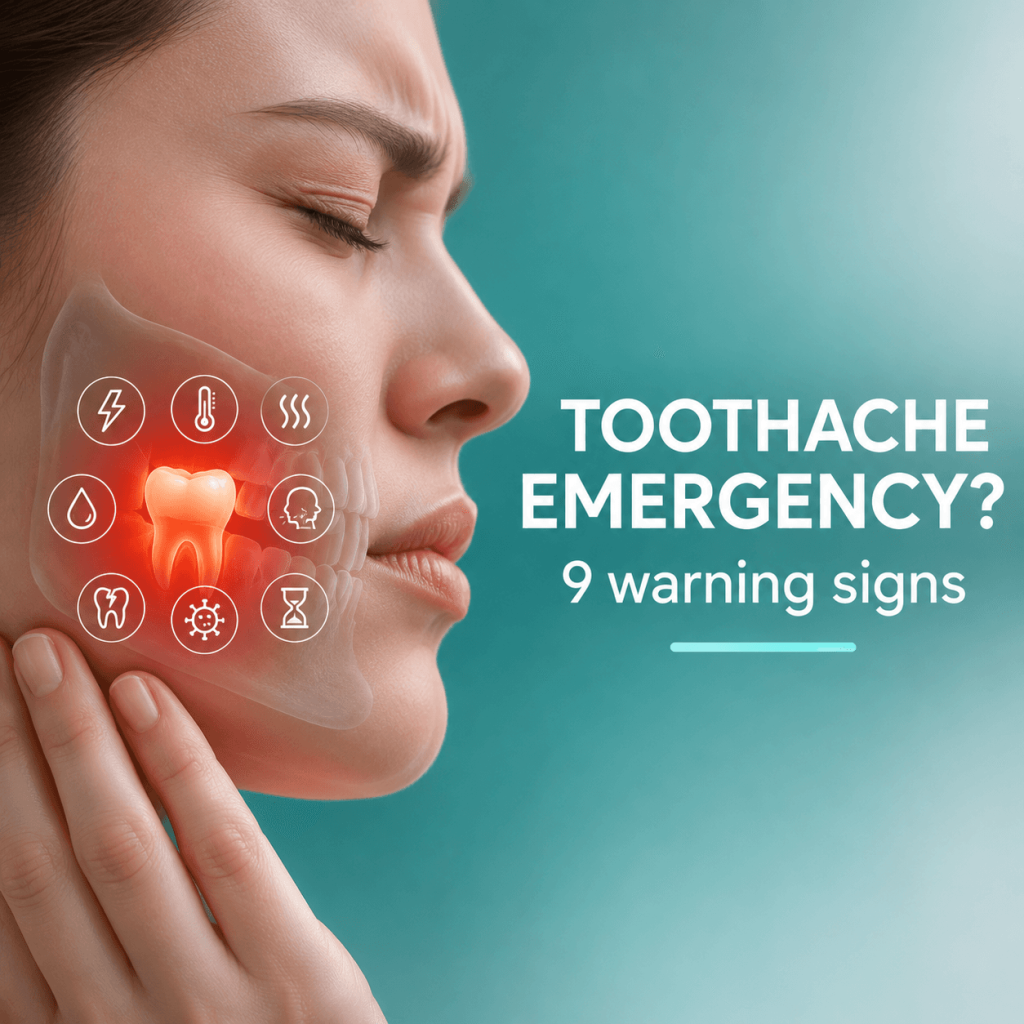
Toothaches are annoying. Sometimes they are just annoying.
Other times they are your body waving a big red flag and you do not want to ignore it.
The tricky part is that dental pain is not always dramatic. You can be sitting there, sipping coffee, thinking you will book something next week… while the problem is quietly getting worse. Infection, swelling, pressure building up. And then it turns into a weekend emergency. Always on a weekend, somehow.
So let’s make this simple. If you have a toothache and you are not sure whether it is urgent, here are nine clues that usually mean, yes, this is an emergency.
1. Your face is swelling (even a little)
If your cheek, jaw, or gum area is swelling, take it seriously.
Swelling can mean infection, and dental infections can spread. Sometimes fast. If it is getting bigger over hours, if it feels warm, tight, or puffy, or if your bite suddenly feels different because of pressure, that is not a “wait and see” situation.
Call an emergency dentist.
2. You have a fever, chills, or you feel sick with the toothache
Pain plus feeling unwell is a bad combo. Fever can mean your immune system is fighting an infection that is not staying contained.
Even if the tooth pain is “only” moderate, a fever changes the picture. Same for chills, fatigue, body aches, or that weird flu like feeling.
If you have swelling plus fever, especially, get help right away. It’s crucial to understand that these symptoms may indicate a severe underlying issue that requires immediate attention as highlighted in this comprehensive guide on dental health emergencies.
3. The pain is severe and not responding to medication
A little soreness that comes and goes is one thing.
Pain that keeps you up, makes it hard to concentrate, or does not settle down with over the counter pain relief is another. When pain is intense and constant, it can point to deep decay, an abscess, nerve inflammation, or a cracked tooth.
Also, if you are taking more and more pain meds just to function, that is your sign. Don’t ride it out.
4. You see a pimple or bump on the gum near the tooth
This often looks like a small blister or pimple on the gum. People sometimes press it or poke it (please do not), and it may drain bad tasting fluid.
That is commonly a sign of infection and pus drainage from an abscess. It might even temporarily reduce pressure, which tricks you into thinking it is improving. But the infection is still there. It still needs treatment.
5. You have trouble swallowing, breathing, or opening your mouth
If a toothache comes with difficulty swallowing, breathing changes, or you cannot open your mouth normally, treat it as urgent.
This can mean infection and swelling are spreading into spaces that affect your airway or jaw movement. Do not wait for it to “calm down.” Get assessed immediately. If breathing is affected, go to the ER.
6. A tooth is cracked, broken, or knocked out
Sometimes the toothache is not even a classic ache. It is trauma.
If you break a tooth and it hurts, or you can see a crack line, or the tooth is loose, that can become an emergency fast. Exposed dentin and nerve tissue are sensitive and vulnerable to infection.
And if a tooth is knocked out completely, time matters. The sooner you get help, the higher the chance it can be saved.
7. You cannot bite down without sharp pain
Biting pain that feels sharp or sudden often points to a cracked tooth, a high filling, an inflamed ligament around the tooth, or an infection at the root.
It can start as “only when I chew,” and then quickly become constant. If you are avoiding chewing on one side or you feel like something is stabbing when you close your teeth, book an urgent visit.
8. You have persistent bleeding or a painful swollen gum around one tooth
Bleeding gums can be common with gum disease, sure. But persistent bleeding from one area, especially with swelling and pain, can mean something more acute.
A gum infection, a trapped piece of food that has caused an abscess, a failing crown edge, even a partially erupted wisdom tooth with infection. If the gum is very tender, swollen, and you cannot clean it without bleeding, it is worth being seen quickly.
9. The toothache is paired with a bad taste or bad smell that won’t go away
That constant bad taste, or a foul smell that brushing does not touch, can be another clue of infection or draining pus. People often describe it as metallic, bitter, or just “gross.”
If it is new and it is sticking around along with pain, do not ignore it. It usually means there is something going on under the surface.
What you can do right now (until you’re seen)
This is not a replacement for care, just a way to get through the next few hours.
- Rinse gently with warm salt water.
- Use a cold compress on the outside of the cheek for swelling.
- Stick to soft foods. Avoid chewing on the sore side.
- Keep the area as clean as you can, gently.
- Take over the counter pain relief only as directed on the label, unless your physician says otherwise.
- Avoid placing aspirin directly on the gum or tooth. It can burn tissue.
And if symptoms are escalating, especially swelling, fever, or swallowing issues, treat it like the emergency it is.
Need an emergency dentist in Mississauga?
If you are in Mississauga and you are dealing with any of the signs above, it is worth calling a clinic that handles emergency dentistry and can guide you quickly.
At Aalexandra Dental, we provide emergency dental care along with treatments that toothaches often end up needing, like root canal treatment, tooth extraction, crowns, and urgent exams. We are family friendly, we welcome new patients, and we also accept the Canadian Dental Care Plan (CDCP) and work with most major insurance providers.
If your gut says, “this feels like more than a normal toothache,” you’re probably right. Call and get it checked. The goal is relief, yes, but also preventing a small problem from turning into a bigger one.
FAQs (Frequently Asked Questions)
What are the signs that a toothache is a dental emergency?
Signs of a dental emergency include swelling of the face, fever or chills, severe pain not relieved by medication, a pimple or bump on the gum near the tooth, difficulty swallowing or breathing, a cracked or knocked-out tooth, sharp pain when biting down, persistent bleeding or painful swollen gums around one tooth, and a bad taste or smell that won’t go away.
Why is facial swelling during a toothache serious?
Facial swelling can indicate an infection that may be spreading quickly. If you notice your cheek, jaw, or gum area swelling—especially if it feels warm, tight, or puffy—it is important to seek emergency dental care immediately to prevent further complications.
When should I seek immediate medical attention for a toothache with fever?
If your toothache is accompanied by fever, chills, fatigue, or flu-like symptoms, it suggests your body is fighting an infection that could be severe. Immediate dental evaluation is necessary to address the infection and prevent it from spreading.
What should I do if I see a pimple or bump on my gum near a painful tooth?
A pimple or bump on the gum often signals an abscessed tooth with infection and pus drainage. Do not poke or press it. Instead, seek prompt dental treatment as this condition requires professional care to resolve the infection.
How can I manage toothache pain before seeing a dentist?
Until you can see a dentist, rinse gently with warm salt water, apply a cold compress on the cheek to reduce swelling, eat soft foods avoiding chewing on the sore side, keep the area clean gently, and take over-the-counter pain relief as directed. Avoid placing aspirin directly on the gum or tooth.
What should I do if my tooth is cracked, broken, or knocked out?
If your tooth is cracked or broken and causing pain, or if it has been knocked out completely, seek emergency dental care immediately. Prompt treatment increases the chance of saving the tooth and prevents infection.